Organization
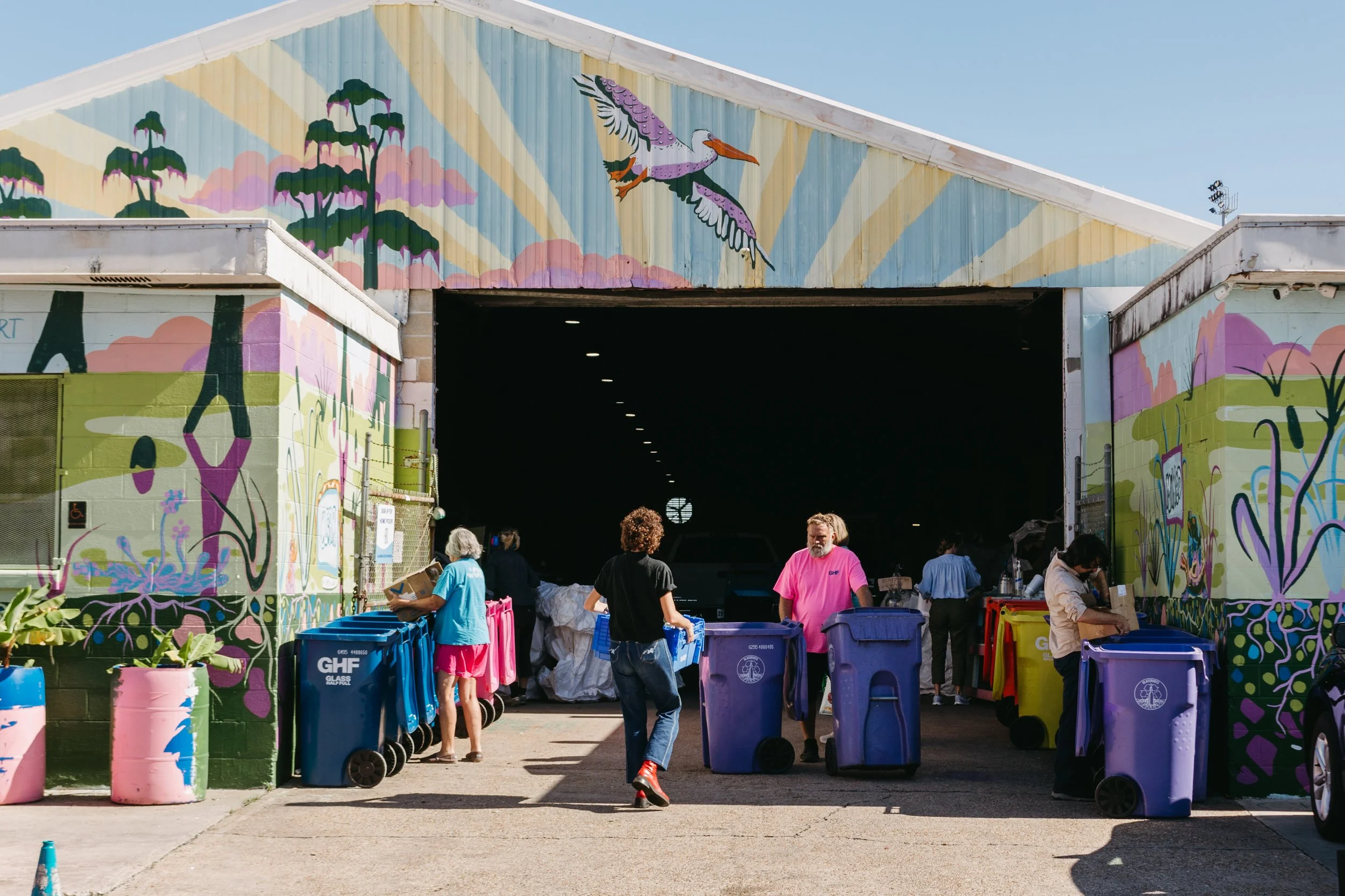
Glass Half Full is turning New Orleans bottles into the sand Louisiana needs to rebuild its coast.
Glass Half Full started in 2020 when Tulane students Franziska Trautmann and Max Steitz were sharing a bottle of wine and talking about the lack of glass recycling in New Orleans.
So they started doing it themselves.
They began collecting bottles in a backyard and crushing glass by hand. As more people showed up with glass, the operation grew with them. Today, Glass Half Full operates a processing facility in New Orleans and has grown into Louisiana’s largest glass recycler.
The glass stays in Louisiana. It is sorted, cleaned, pulverized, and sifted into everything from fine sand to gravel. From there, the material can become new glass, flooring, sandbags, construction material, or part of a coastal restoration project.
That last use has become an especially important part of the work.
Glass Half Full has worked with Tulane researchers and other partners through ReCoast to study how recycled glass sand can be used in Louisiana wetlands. The partnership received $5 million from the National Science Foundation to expand that research, with restoration work at places including Big Branch Marsh National Wildlife Refuge and land belonging to the Pointe-au-Chien Tribe.
The work reaches far beyond recycling. New Orleans cannot be separated from the coast that protects it. Glass Half Full has found a way for something the city throws away to become useful material for protecting the place itself.
A local waste problem became a local source of raw material.
And a bottle that once had nowhere to go now has a job in the city’s future.
The process happens close to home.
Glass collected from residents, businesses, and events around New Orleans is brought to Glass Half Full’s local facility, where it is sorted and run through crushers. The resulting material is sifted into different sizes, from soft sand to larger pieces of gravel.
Then it goes back out into the world.
Some can become new glass. Some goes into sandbags for flood protection. Some is used in construction and landscaping. And some heads toward Louisiana’s coast, where researchers and restoration teams are learning how recycled glass sand can help support wetlands and native vegetation.
It creates an unusually direct relationship between a city and its waste.
What New Orleans discards can become part of what protects New Orleans.

Further reading
Visit source