Builder
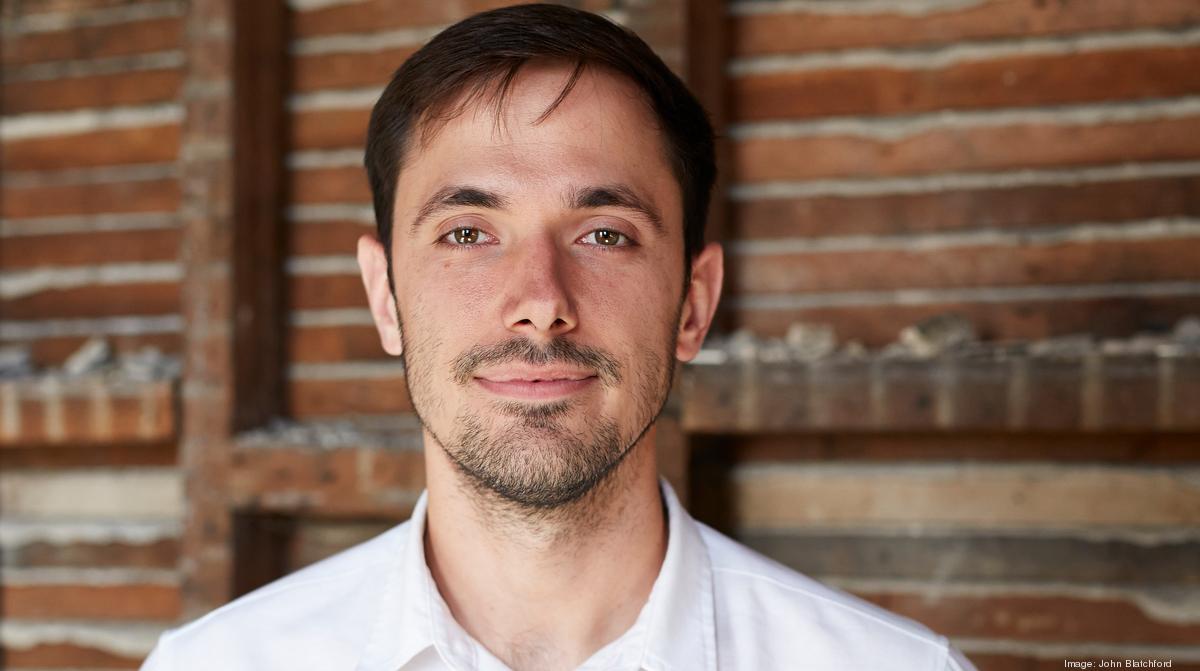
John Blatchford’s development career began with a building that most people would have passed by.
In 2013, he bought a severely deteriorated historic property in Cincinnati for $5,000. It had no roof, no windows, and little of what would make it immediately usable. He spent much of the following year working on the building himself, eventually leaving his job to pursue historic rehabilitation full-time.
That first project became the beginning of Kunst, his development practice focused on Cincinnati’s historic building stock.
Blatchford has since worked on more than 30 rehabilitation projects in the city, often taking buildings constructed in the nineteenth century and adapting them into contemporary multifamily housing. The work requires much more than restoring an attractive façade. Each property comes with its own structural conditions, obsolete systems, code requirements, financing challenges, and construction surprises.
One of the clearest examples is Kunst’s work at 205 and 207 West McMicken Avenue in Over-the-Rhine. Both buildings had experienced long periods of vacancy. The rehabilitation returned them to use as apartments, with nine units already open by September 2019.
The significance is in the accumulation of those individual projects.
One restored building returns residents to a block. Another repairs a gap in the street. Another preserves the scale and architectural character that make the neighborhood distinctive. Over time, the work helps an inherited neighborhood become useful again without requiring its physical fabric to be erased.
Historic preservation is often discussed as a question of whether an old building is worth saving.
For a developer, the harder question is how to make saving it possible.
A vacant building may have beautiful masonry, generous windows, and a valuable location while still requiring substantial work before anyone can live there. The roof may need replacement. Structural conditions may be uncertain. Mechanical systems may be obsolete. Interior layouts may need to change. Construction costs can exceed what the finished property will support.
Blatchford has built Kunst around solving those problems repeatedly.
The firm operates as a developer, general contractor, and historic-tax-credit consultant. Historic tax credits can help close the financial gap between rehabilitation costs and the value of a completed building, while Kunst’s construction and consulting work allow it to apply specialized knowledge across multiple projects.
That combination matters because small historic buildings can be difficult to rehabilitate one at a time. They often lack the scale of a major redevelopment, but still require many of the same technical, financial, and regulatory capabilities.
Kunst’s work shows how those capabilities can become a repeatable practice.
For Building America, Blatchford represents a builder working with the city that already exists. His projects preserve useful structures, return housing to vacant properties, and help maintain the continuity of Cincinnati’s historic neighborhoods.
The larger question is how many more buildings could find a second life if the knowledge, financing, and construction capacity required to rehabilitate them became easier to access.
Further reading
Visit source