Place
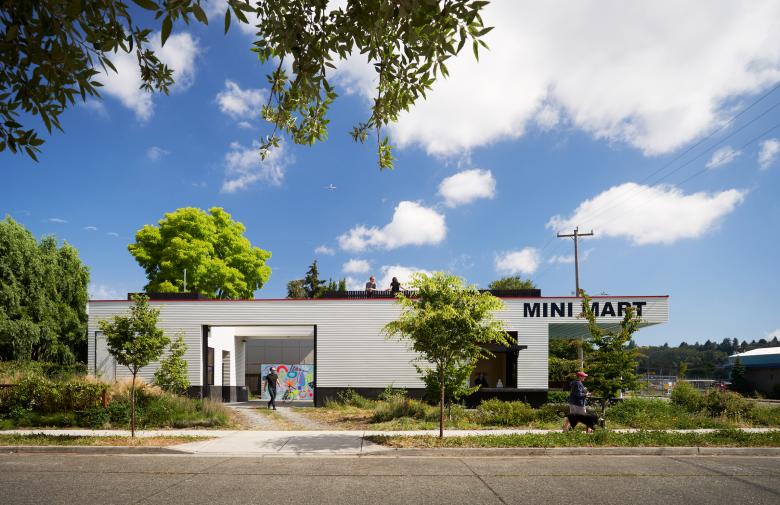
In Seattle’s Georgetown neighborhood, a former gas station has become a place for art, community gatherings, and environmental repair.
Mini Mart City Park began with an idea from the artist collective SuttonBeresCuller, made up of John Sutton, Ben Beres, and Zac Culler. The group saw potential in a derelict filling station that had sat vacant for more than 20 years and began working toward a new use for the site in the late 2000s.
The challenge was what lay beneath it.
Decades of fuel storage and other commercial uses had left petroleum contamination in the soil and groundwater. Rather than abandon the project, the artists worked with environmental consultants, architects, local government, and community partners to develop a way to clean the property while creating a useful public space.
After more than a decade of planning, remediation work, fundraising, and construction, Mini Mart City Park officially opened in 2022.
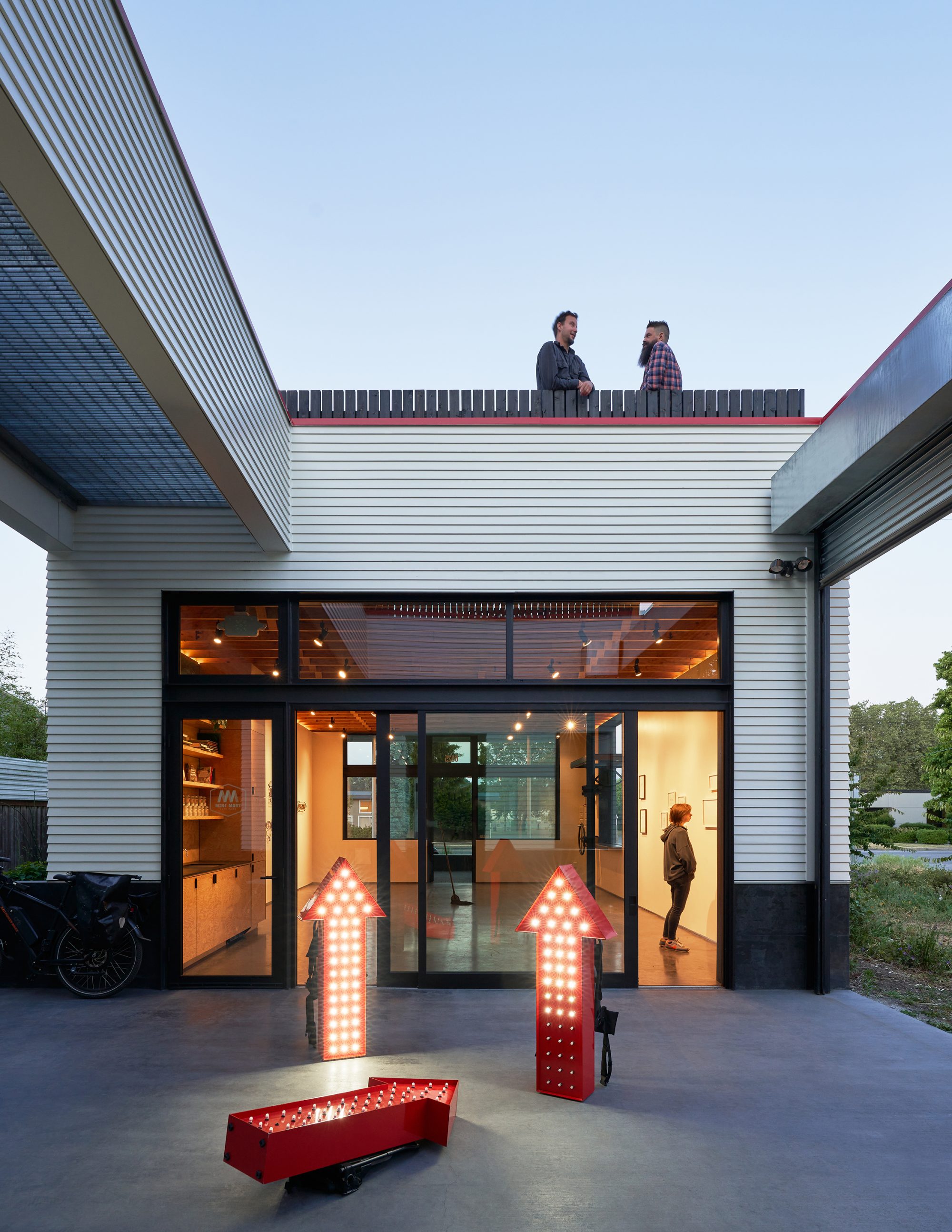
Today, the site includes a compact gallery, courtyard, rooftop space, and approximately 3,000 square feet of public park. It hosts exhibitions, performances, youth programs, environmental education, and community gatherings. The new building, designed by Seattle architecture studio GO’C, recalls the form of the original filling station while opening toward the park through large operable windows and doors.
The result is a place that retains the memory of its former use while giving the neighborhood an entirely different reason to visit.
Mini Mart’s environmental cleanup is still part of the place’s daily life.
An underground air-sparge and soil-vapor-extraction system works to remove residual petroleum contamination from the soil and groundwater. Its control equipment is visible to visitors, turning a technical process that would normally be hidden into an opportunity to learn about brownfield remediation. Solar panels help power the system, while green stormwater infrastructure is designed to capture or filter rainfall on the site.
That makes Mini Mart more than a completed adaptive-reuse project. It is an ongoing effort to repair a damaged piece of land while putting it back into community use.
The project also shows how much institutional work can sit behind a small physical intervention. SuttonBeresCuller established a nonprofit, purchased the property in 2013, assembled funding, worked through environmental investigations, and coordinated with specialists to make the site safe and usable. The process took years longer than the artists initially imagined.
Today, Mini Mart continues to operate as a nonprofit cultural space, with free public programming and partnerships focused on art, education, environmental stewardship, and the Duwamish Valley community.
For Building America, the project offers a useful example of what can happen when an overlooked parcel is treated as an opportunity rather than a liability to be cleared away.
The former gas station is still being repaired. But it is already serving the neighborhood.
Further reading
Visit source