Place
For much of its history, Memphis’s riverfront was a working edge of the city. Warehouses, railroads, grain elevators, and other industrial uses occupied the land along the Mississippi. As those uses changed, the city was left with an extraordinary waterfront that had not been fully developed as a place for everyday public life.
Tom Lee Park occupied part of that riverfront, but for years it was largely a flat expanse of grass. It offered views of the river and space for major festivals, yet had relatively few trees, amenities, or places for people to gather throughout the year.
In 2017, Memphis began a broader effort to rethink its relationship with the river. Studio Gang was commissioned to develop a riverfront concept, and the work eventually led to a major transformation of Tom Lee Park. Memphis River Parks Partnership brought together public and private funding, community input, and a design team led by Studio Gang and landscape architecture firm SCAPE.
The $61 million project rebuilt 31 acres along the Mississippi. Construction began in 2020, and the transformed park opened on September 2, 2023.
The change is visible in the landscape itself. Where there had once been a mostly flat lawn, new hills, pathways, and planted areas create a sequence of different experiences along the river. More than 1,000 new trees, including over 300 oaks, establish a growing canopy. Beneath them, restored soils support native planting and habitat for birds and pollinators along the Mississippi Flyway.
The park’s northern entrance, Cutbank Bluff, creates a more accessible connection from downtown. Farther south, visitors encounter playgrounds, sports courts, lawns, gardens, and places to sit above the water. The 220-foot Memphis Flyway carries people through the tree canopy and over wetlands toward views of the river.
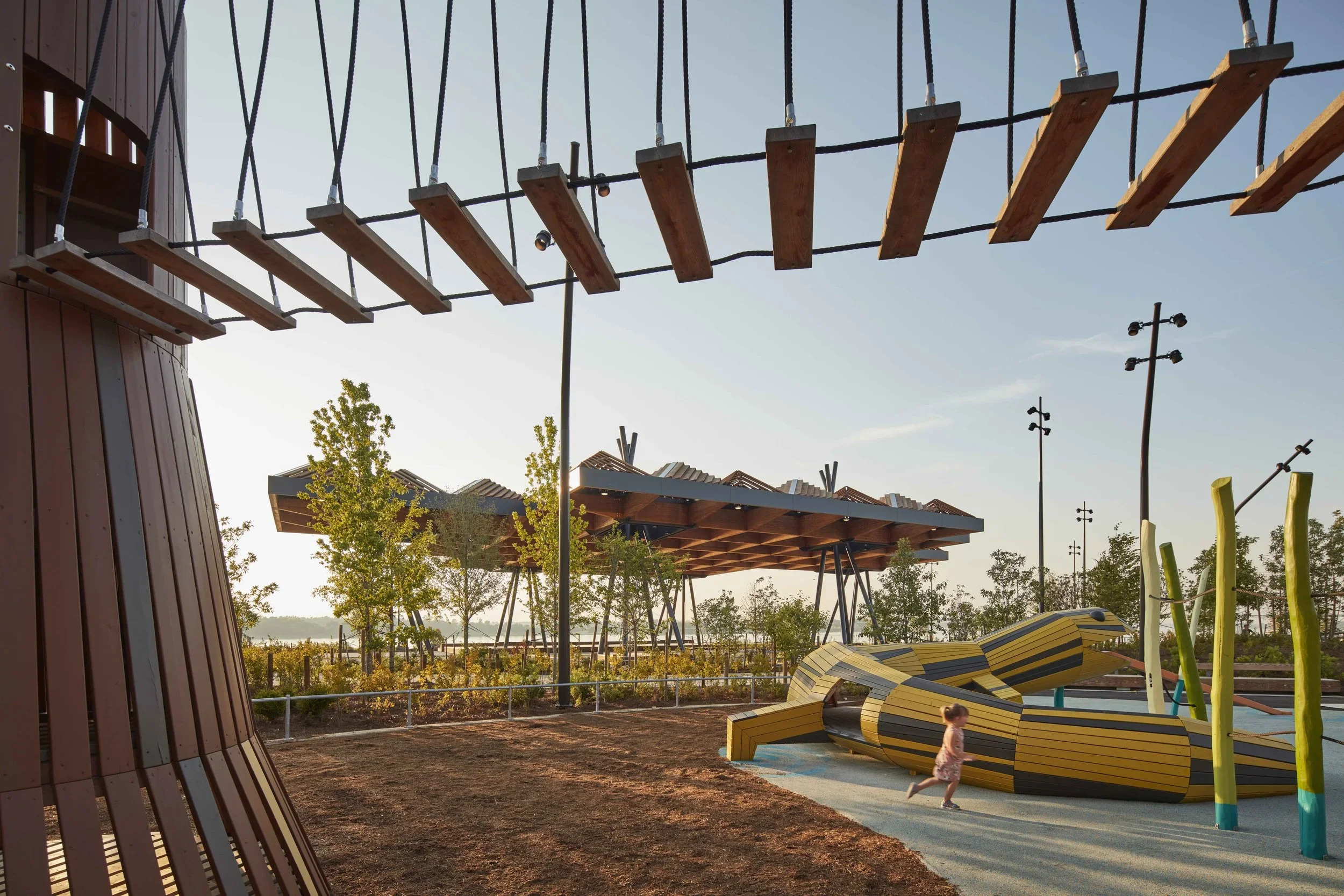
At the center of the park, the 16,000-square-foot Sunset Canopy provides shade and space for community activities. A river-themed playground, designed by Monstrum, gives children a place to climb and explore, while new public art adds another layer to the park’s identity.
The result is a riverfront with more reasons to visit—and more ways to spend time there. Someone can come for a concert or festival, but also for a walk, a basketball game, an afternoon with children, or a quiet place to watch the Mississippi.
The transformation of Tom Lee Park was also an exercise in deciding what a major public space should be for.
The old park had long served as a venue for large events, including Memphis in May festivals. The redesign prompted concerns about how new landscape features and permanent amenities would affect those events. After public disagreement and mediation, the project moved forward with a design intended to accommodate both large gatherings and more varied everyday uses.
That balance shaped the physical plan. The park is organized into four broad areas: the Civic Gateway, Active Core, Community Batture, and Habitat Terraces. The northern sections support more active urban uses, while the southern landscape offers quieter spaces and closer contact with the river’s ecology. New entrances and accessible routes connect the park to downtown streets and nearby civic institutions.
The project also required substantial work below the surface. The site sits on a man-made dike, and much of the land had once been used as a city dump. Rebuilding the landscape meant creating a healthier soil system capable of supporting trees and native vegetation, while reshaping the ground to accommodate paths, gathering spaces, and stormwater. The new planting is intended to become more substantial as the canopy matures.
The park’s name carries another important story. In 1925, Tom Lee, a Black river worker who could not swim, rescued 32 people after a steamboat capsized in the Mississippi. The park was named for him in 1954. Its redesign includes A Monument to Listening, a permanent installation by artist Theaster Gates, alongside programming developed in partnership with the National Civil Rights Museum.
The completed park is part of a larger effort to reconnect Memphis’s downtown, neighborhoods, and riverfront. Its long-term success will depend not only on the quality of the construction, but on maintenance, programming, accessibility, and the continued growth of its landscape.
Tom Lee Park demonstrates what a city can gain when it treats its waterfront as a place to build public life, not simply land to preserve for occasional events.

Further reading
Visit source