Company
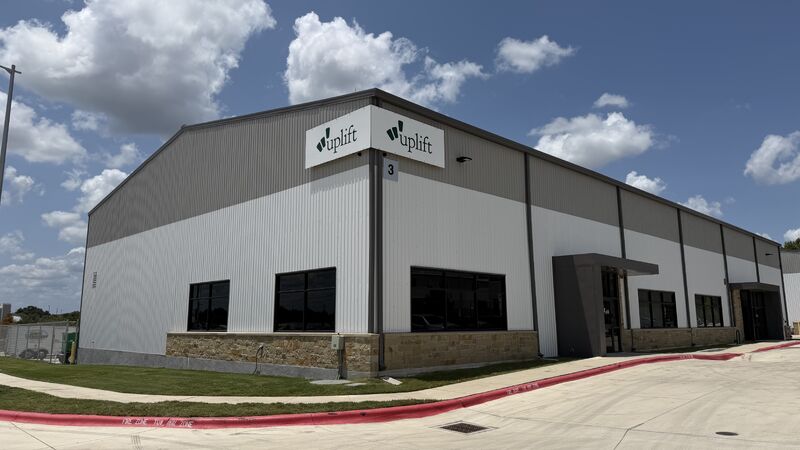
Uplift wants to make housing something America can mass-produce.
The Austin startup was founded by Charlie Nitschelm and Trevor O’Leary, engineers who previously worked at SpaceX and Tesla. They started with a question that comes naturally from those worlds: why is something as essential as a home still largely assembled one project at a time?
Their answer is the Uplift Microhome.
Each home is designed to leave the factory as a finished product. Solar, batteries, water storage, heating, cooling, a bed, and basic living systems are built into the unit. It can travel on a standard truck, be moved with a forklift, level itself on uneven ground, and operate without waiting for conventional utility connections.
That makes speed part of the product.
Uplift initially developed the concept around disaster and transitional housing, where months can pass between someone losing a home and receiving a temporary place to live. The same system could eventually serve other situations where housing needs to appear quickly, from remote work sites and temporary communities to places recovering from fire or storms.
The company won the 2026 MIT $100K Entrepreneurship Competition with an early prototype. A few months later, Uplift launched publicly with $7 million in seed funding, moved into a factory in Austin, and began building the team that will attempt to manufacture the homes at much larger volumes.
That scale is still ahead of them.
The idea already points toward a useful question for housing: how much of building a home can happen before the home ever reaches its site?
Uplift is building one possible answer.
The factory is central to Uplift’s bet.
Most homes bring an enormous number of people, materials, systems, schedules, and approvals together at a particular piece of land. Uplift is trying to move much more of that complexity into one repeatable manufacturing process.
Build the same product repeatedly. Learn from every unit. Improve the production line. Reduce the work required after a home arrives.
It is an industrial approach to a problem Americans usually experience as a local construction project.
Whether Uplift can make that approach work at enormous scale remains to be seen. If it can, the result could change how quickly housing reaches the people and places that need it.

Further reading
Visit source